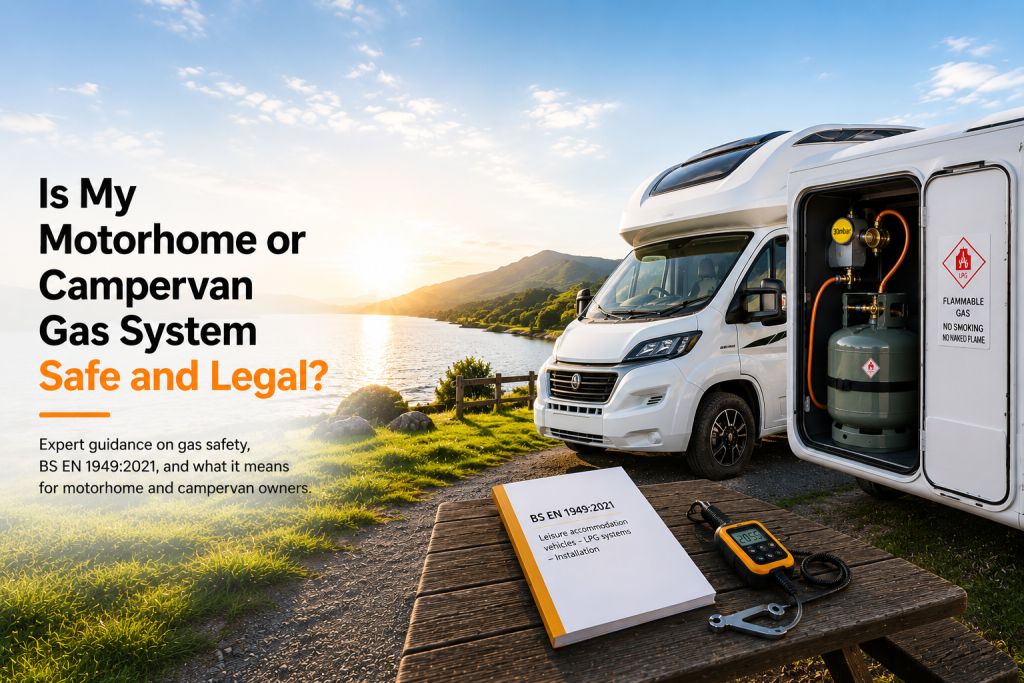
Buying a motorhome or campervan is exciting, but it also comes with important responsibilities — especially when it comes to gas safety.
From cooking and heating to hot water systems, LPG gas is used in many leisure vehicles across the UK. While these systems are designed to be safe, they must also be installed and maintained correctly to protect you, your passengers, and your vehicle.
One of the most important standards covering gas safety in motorhomes and campervans is BS EN 1949:2021. But what does this actually mean for owners?
In this guide, we answer the most common questions about motorhome and campervan gas safety in simple, straightforward language.
What is BS EN 1949:2021?
BS EN 1949:2021 is the official British and European safety standard for LPG gas installations in:
- Motorhomes
- Campervans
- Caravans
- Self-build van conversions
In simple terms, it sets the rules installers should follow to make sure gas systems are safe for living and travelling in leisure vehicles.
The standard covers:
- Gas storage
- Ventilation
- Pipework
- Appliance installation
- Leak testing
- Safety equipment
Is BS EN 1949:2021 a legal requirement?
The standard itself is not a law, but it supports wider UK and European safety regulations.
In practice, professional converters, dealers, and installers are expected to follow it to meet their legal duty of care and product safety responsibilities. Insurance providers and vehicle inspections also rely heavily on these standards.
For owners, following the standard helps ensure:
- Your vehicle is safe to use
- Your insurance remains valid
- Your motorhome maintains its resale value
Does this apply to campervans as well as motorhomes?
Yes.
The standard applies to any leisure vehicle used for living or sleeping that has an LPG gas system installed. This includes:
- Factory-built campervans
- Panel van conversions
- DIY self-builds
- Large A-class motorhomes
- Compact campervans
If your vehicle uses gas for cooking, heating, refrigeration, or hot water, the same safety principles apply.
Why gas safety matters
LPG systems are extremely safe when installed correctly. However, poorly installed or badly maintained systems can create serious risks, including:
- Gas leaks
- Fire hazards
- Carbon monoxide poisoning
That is why proper installation, ventilation, and testing are essential.
What safety features should a motorhome or campervan have?
A compliant gas system should include several key safety features.
Safe gas storage
Gas bottles should be stored in a sealed gas locker, separated from the living area and vented externally.
Drop-out ventilation
Because LPG gas is heavier than air, any leak needs a safe escape route. Floor-level drop-out vents allow gas to leave the vehicle safely.
Leak testing
Gas systems should be pressure tested to confirm there are no leaks in the installation.
Carbon monoxide alarm
A carbon monoxide alarm compliant with EN 50291 standards is strongly recommended and considered essential safety equipment.
Suitable appliances
Only appliances designed specifically for mobile leisure vehicles should be installed. Household appliances are generally not suitable for motorhome use.
Can you install or modify a gas system yourself?
Technically, yes — but the installation must still meet the correct safety standards.
Because LPG systems can be dangerous if installed incorrectly, most owners choose to use a qualified professional. Poor workmanship could:
- Create serious safety risks
- Affect insurance cover
- Causes problems when selling the vehicle
If you are unsure, always seek advice from a qualified Gas Safe engineer with LPG experience.
How do you know if your vehicle meets the standard?
There are several good indicators:
- Installation paperwork or habitation checks
- Recent gas safety inspection
- Properly vented gas locker
- Working carbon monoxide alarm
- Professional-quality pipework and fittings
If you are buying a used motorhome or campervan, it is always worth checking when the gas system was last inspected.
What happens if a gas system does not meet the standard?
A non-compliant system may increase the risk of:
- Gas leaks
- Fire
- Carbon monoxide exposure
- Insurance complications
- Reduced resale value
Regular inspections and maintenance are the best way to keep your system safe and reliable.
Final thoughts
Motorhome and campervan gas systems are designed to make life on the road comfortable and convenient. When properly installed and maintained, they are extremely safe.
BS EN 1949:2021 exists to help ensure every gas installation is fit for purpose, professionally installed, and safe to use while travelling or living in your vehicle.
Whether you own a large motorhome or a compact campervan, understanding the basics of gas safety can help you travel with greater confidence and peace of mind.